Dairy-Free Cheese Pizza
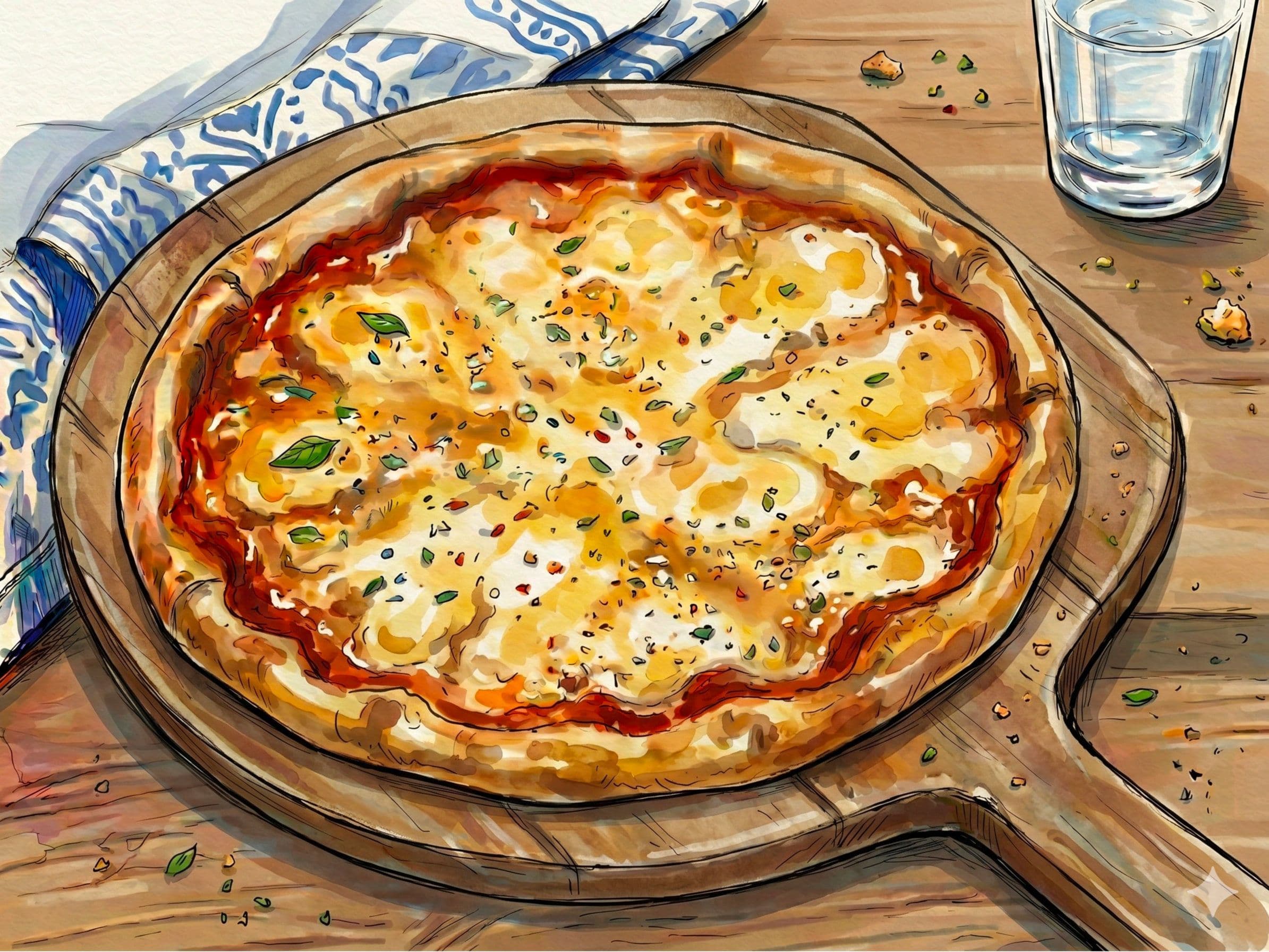
A crisp, bubbly dairy-free cheese pizza with tomato sauce and dairy-free mozzarella-style shreds, baked hot so the cheese melts instead of drying out.
Recipe by Andrew Tibbs, the Non Dairy Dude in Dairy-Free Dinner Recipes
Published
- Total
- 2h 16m
- Servings
- 4
- Level
- medium
I went through a stretch where every dairy-free pizza I made came out either soupy or like a cracker with sauce on it. The fix wasn't a fancier dough, it was heat and restraint. A hot oven and a thin layer of sauce do most of the work here, and the dairy-free mozzarella-style shreds actually melt and gloss if you don't bury them under too much topping.
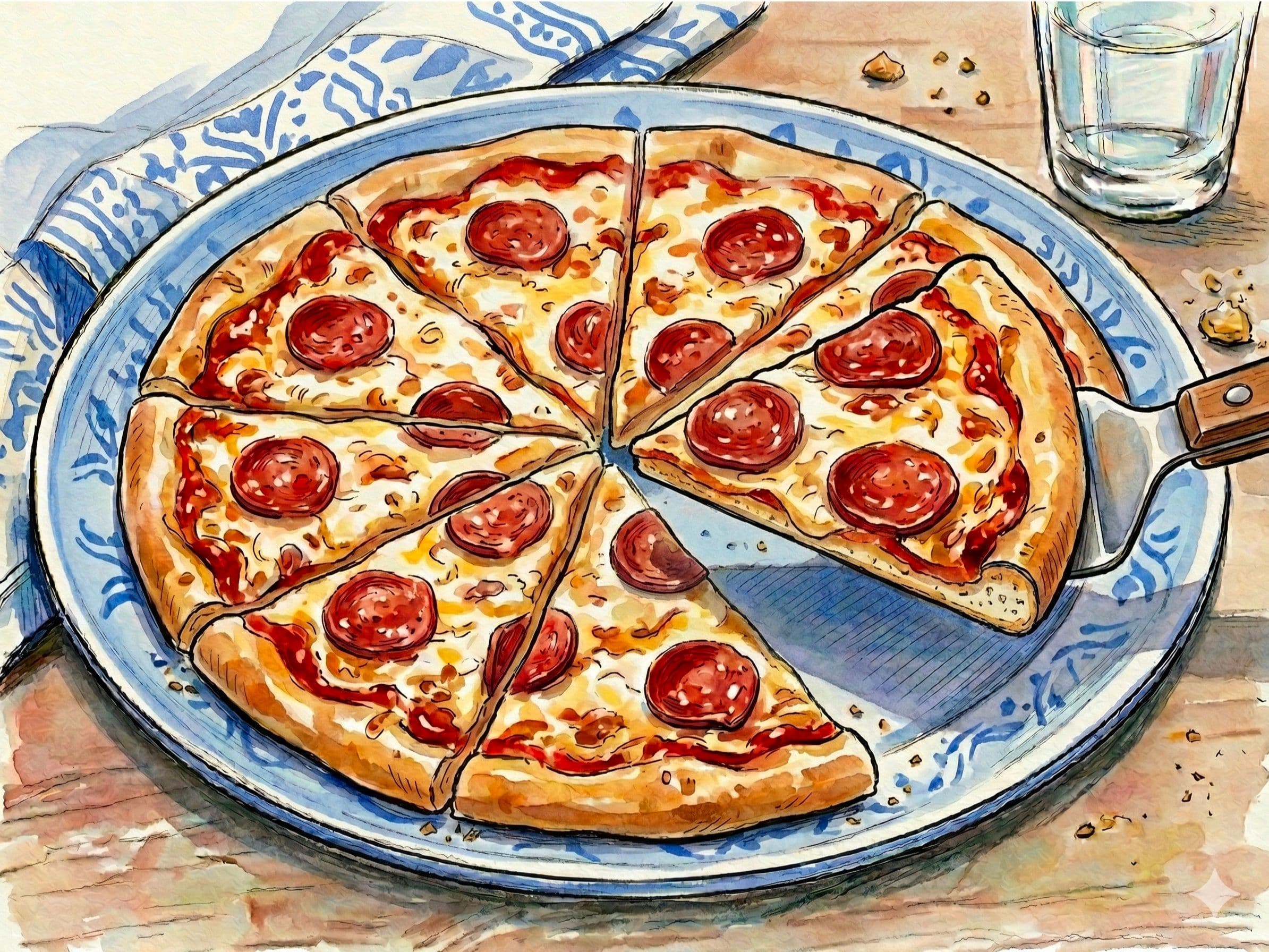
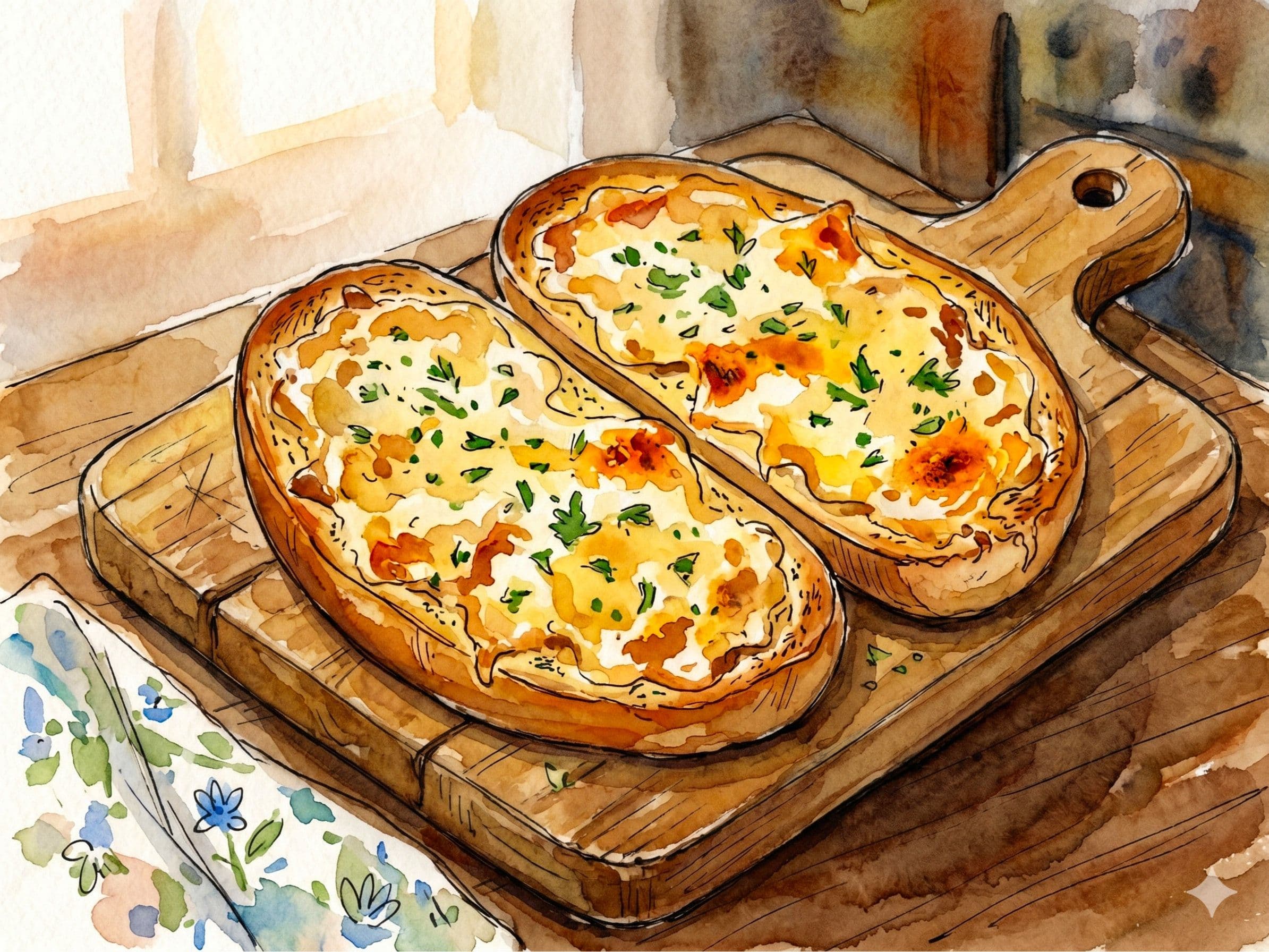
This is the plain cheese pizza I make when I want something that tastes like the pizzeria slice I grew up on, not a pizza dressed up to distract from missing dairy. If you want more going on, my dairy-free pepperoni pizza uses the same crust and cheese method with pepperoni added. And if pizza night turns into a whole spread, this pairs well with dairy-free cheesy garlic bread on the side.
Store-bought dough works fine on a weeknight. If you've got a day ahead of you, a cold-fermented New York-style dough gets you a better chew and a crust that holds up to the sauce without going limp in the middle.
Ingredients
Dough
- 1 lbPizza dough, store-bought or cold-fermented New York-style homemade dough
- 2 tbspAll-purpose flour, for dusting
- 2 tbspCornmeal or semolina, for the peel or pan
Sauce
- ¾ cupCrushed tomatoes
- 1 tbspExtra-virgin olive oil
- 1 cloveGarlic clove, finely grated
- ½ tspFine salt
- ½ tspDried oregano
- ¼ tspRed pepper flakes, optional
Topping
- 1½ cupsDairy-free mozzarella-style shreds
- 2 tbspDairy-free Parmesan-style topping, optional
- 2 tspOlive oil, for drizzling over cheese
Finish
- ¼ cupFresh basil leaves, optional
- ¼ tspFlaky salt, optional
Instructions
- 1
If the dough is refrigerated, let it sit at room temperature for 90 minutes to 2 hours, until relaxed and easy to stretch. Cold dough springs back, tears more easily, and bakes denser.
- 2
Place a pizza stone or steel on the middle rack and heat the oven to 500 F for at least 30 minutes. If using a sheet pan, place the pan in the oven while it heats.
- 3
Make the sauce. Stir together the crushed tomatoes, olive oil, grated garlic, salt, oregano, and red pepper flakes if using. Taste and adjust with a pinch more salt if needed.
- 4
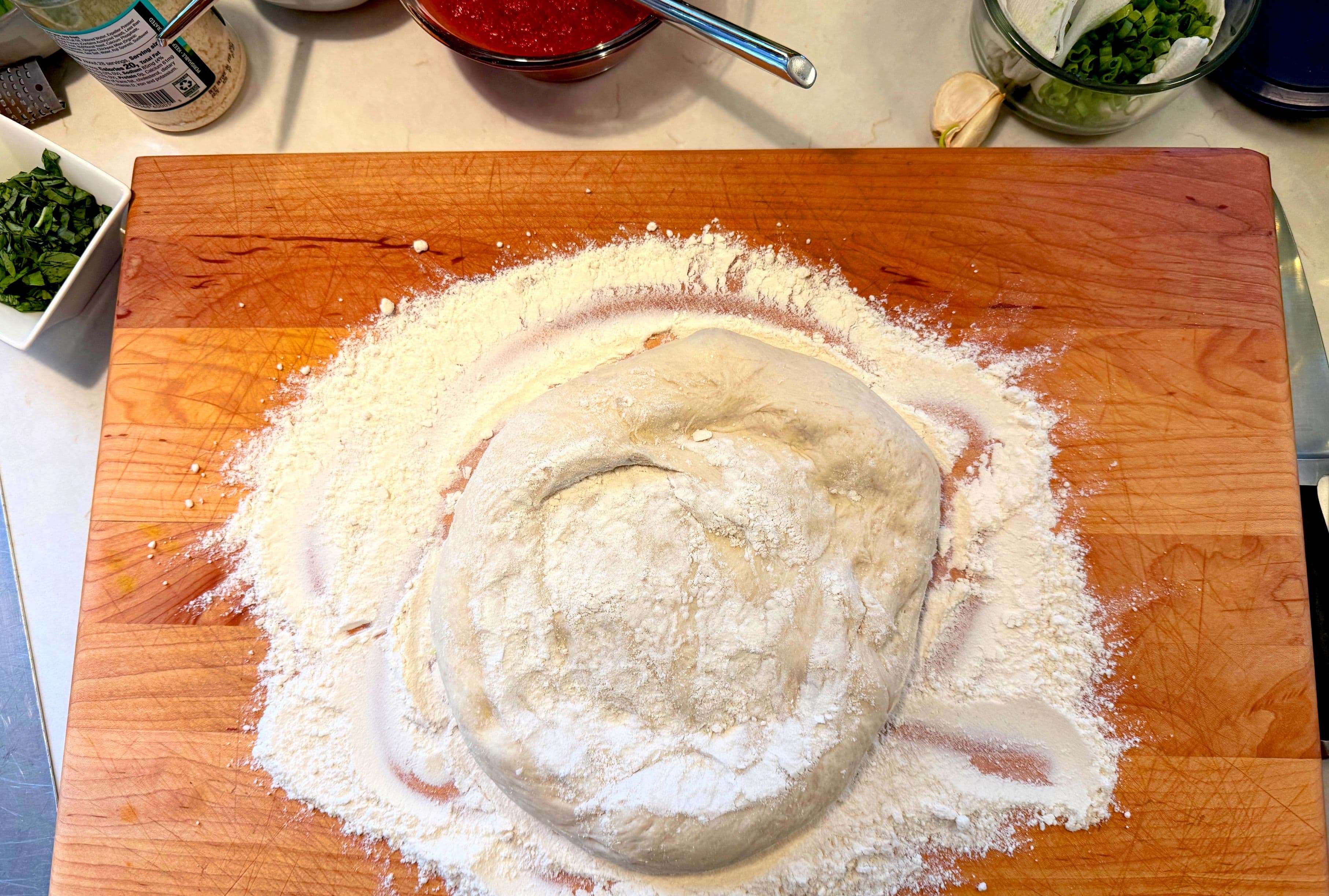
Divide the dough in half for two smaller pizzas, or keep it whole for one large sheet-pan pizza. On a lightly floured surface, stretch the dough gently from the center outward, leaving a slightly thicker rim.
- 5
Dust a pizza peel, inverted baking sheet, or hot sheet pan with cornmeal or semolina. Transfer the stretched dough to it and make sure it can slide before topping.
- 6
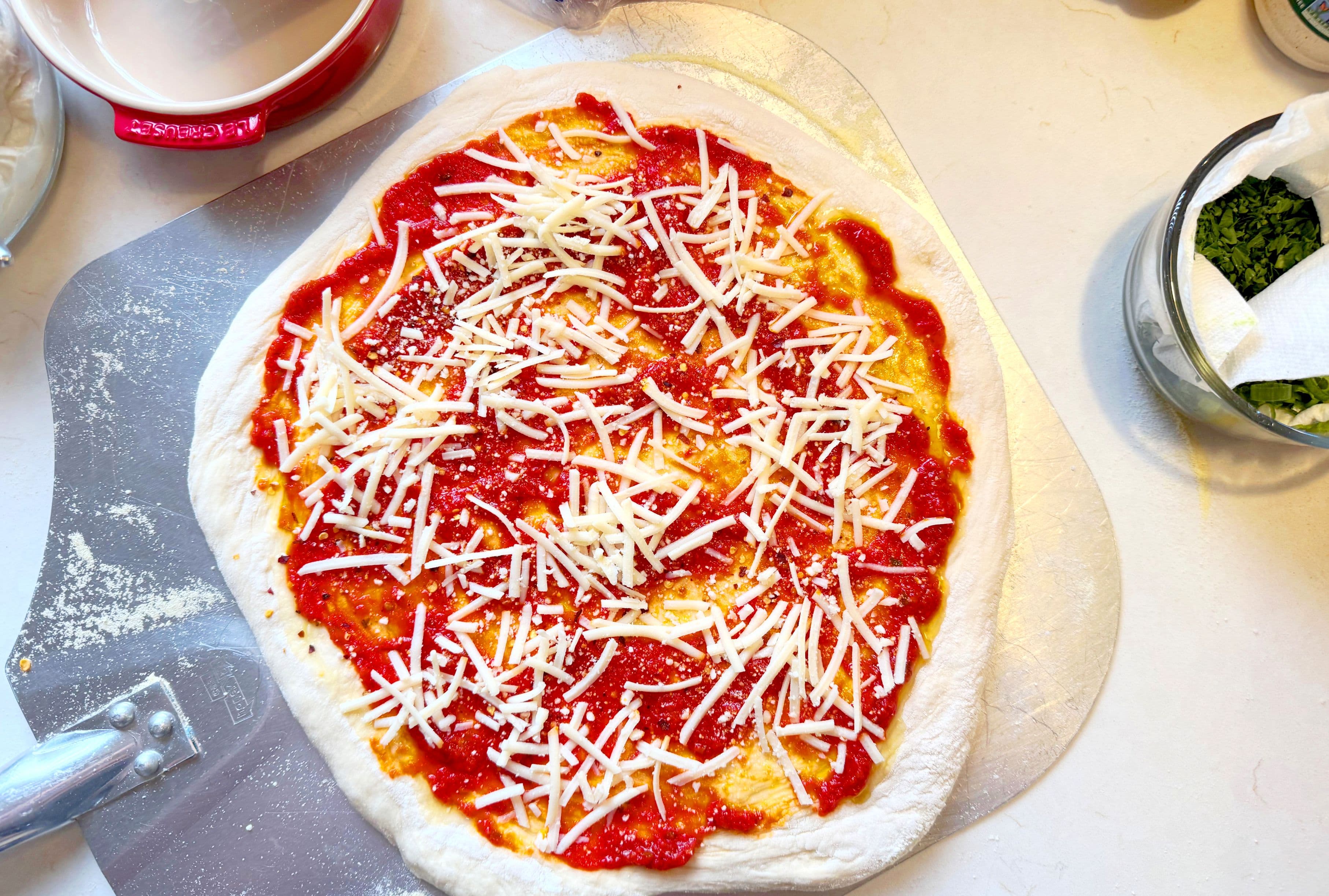
Spread a thin layer of sauce over the dough, using about 1/3 cup sauce per small pizza. Avoid heavy sauce; dairy-free cheese melts better when the top is not too wet.
- 7
Scatter the dairy-free mozzarella-style shreds evenly over the sauce without piling them too thickly. Add dairy-free Parmesan-style topping if using, then drizzle the cheese lightly with olive oil.
- 8
Slide the pizza onto the hot stone or steel, or return the topped sheet pan to the oven. Bake for 8 to 12 minutes for small pizzas, or 13 to 16 minutes for one large sheet-pan pizza, until the crust is browned and the cheese is melted.
- 9
If the crust is done before the cheese looks glossy, move the pizza to the upper rack for 1 to 2 minutes. Watch closely so the edges do not burn.
- 10
Let the pizza rest for 2 to 3 minutes before slicing. Finish with fresh basil and flaky salt if using.
Did you make it?
Tap a star to rate this recipe.
How we make it dairy-free
- Mozzarella → Swapped for dairy-free mozzarella-style shreds. They melt better at high heat, so don't skimp on oven temperature or they'll just soften instead of going bubbly.
- Parmesan → Optional dairy-free Parmesan-style topping, added after the bake for a salty finish. Skip it and the pizza still works fine.
- Butter or oil brushed on the crust → A small drizzle of olive oil over the cheese before baking helps it melt smoothly and keeps the top from drying out.
Tips & Variations
Check the dough label: Most basic pizza dough is dairy-free, but some store-bought doughs contain milk, butter, whey, or cheese powder. Read the label if you need the pizza to be strictly dairy-free.
Preferred dough style: For the best version, use a cold-fermented New York-style dough made with bread flour, water, salt, instant yeast, olive oil, and a little sugar. The oil keeps the crust tender and chewy, the sugar helps browning, and a 24- to 72-hour refrigerator rest builds flavor.
Let the dough warm up: Whether homemade or store-bought, refrigerated dough needs time at room temperature before stretching. If it keeps snapping back, cover it and wait another 15 minutes.
Use less sauce than usual: Dairy-free cheese is more sensitive to moisture than dairy mozzarella. A thin sauce layer helps it melt instead of sliding around or staying gummy.
Do not overload the cheese: A modest, even layer melts better than a thick blanket. Too much dairy-free cheese can stay pasty in the middle.
Add a little oil: The tiny drizzle of olive oil over the shreds helps with gloss, browning, and a more classic pizza finish.
Preheat fully: A hot stone, steel, or sheet pan gives the crust oven spring before the toppings can make it soggy.
Use a cheese you already like melted: Dairy-free shreds vary widely. Pick a brand that melts well for grilled cheese, quesadillas, or nachos.
Sheet pan option: For an easier family-style pizza, press the full pound of dough into an oiled half sheet pan, add the toppings, and bake until the bottom is browned and crisp.
Broiler caution: A quick broil can help some dairy-free cheeses bubble, but it can burn the crust fast. Use it only at the end and watch constantly.
Make it your base: Once the cheese pizza works, add pepperoni, mushrooms, olives, roasted garlic, or cooked sausage. Keep toppings light so the crust stays crisp.
Frequently asked questions
Can I use a different dairy-free cheese brand?⌄
Yes. Any dairy-free mozzarella-style shred that's made to melt will work here. Some budget brands stay waxy no matter what you do, so if you've had a bad experience with one brand, try another before giving up on dairy-free pizza cheese entirely.
Can I make the dough or sauce ahead of time?⌄
The crushed tomato sauce keeps in the fridge for a few days, so make it ahead if you want. Pizza dough actually improves with a cold rise, so making it the night before and letting it sit in the fridge is a good move, not just a time-saver.
How do I store and reheat leftover slices?⌄
Fridge for up to three days in a sealed container. Reheat in a hot oven or skillet, not the microwave, or the dairy-free cheese will turn rubbery instead of melty.
Is this recipe nut-free?⌄
Check the label on whatever dairy-free mozzarella-style shreds and Parmesan-style topping you buy. Most major brands are nut-free and use a coconut oil or starch base, but formulas change, so it's worth a quick scan if you're cooking for someone with an allergy.
Dairy-Free Cheese Pizza · https://nondairydude.com/recipes/dairy-free-cheese-pizza
Get new dairy-free comfort food recipes
New recipes, substitution tips, and classic dishes rebuilt without dairy.